
Drosone®
Hydrocortisone Soluble Tablets
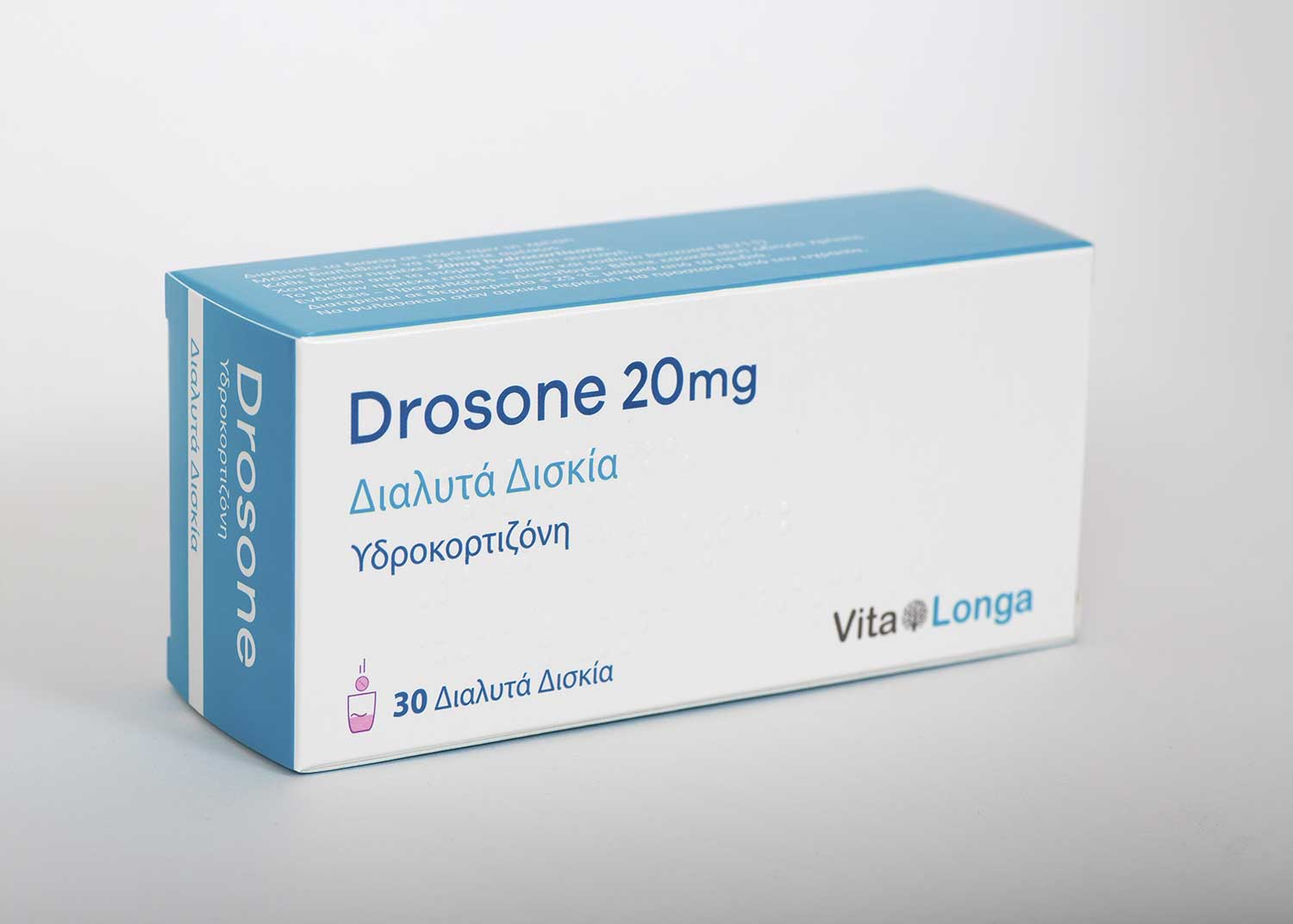
DROSONE SOLU.TAB 20MG/TAB BTx30 in blisters (Alu/Alu)
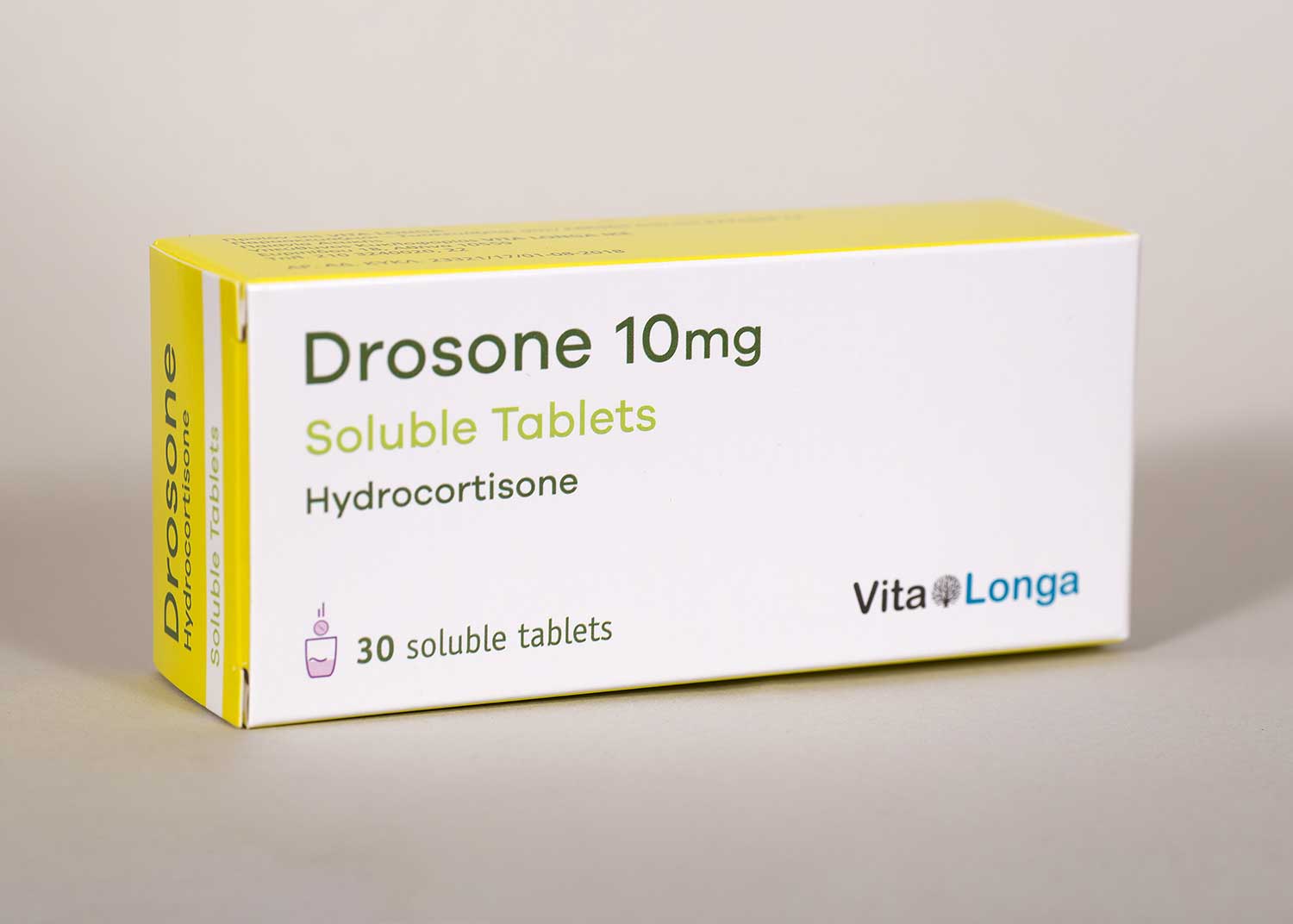
DROSONE SOLU.TAB 10MG/TAB BTx30 in blisters (Alu/Alu)
General Information
Drosone® contains hydrocortisone as its active substance, the active form of naturally produced cortisol. Cortisol is synthesised in the adrenal cortex from cortisone, which is inactive until it is converted to the active hydrocortisone. Hydrocortisone belongs to the short-acting glucocorticoids, with an average duration of action of 8-12 hours. It is included in the World Health Organization’s List of Essential Medicines, where the most effective and safest medicines needed in a health system are listed.
Indications
Drosone® soluble tablets are indicated for replacement therapy in congenital adrenal hyperplasia in children.
Drosone® soluble tablets are also used for the emergency treatment of severe bronchial asthma, drug hypersensitivity reactions, serum sickness, angioneurotic oedema and anaphylaxis in adults and children.
Posology and Method of Administration
Dosage
Replacement therapy
Paediatric population: 10-30mg in divided doses is the usual daily requirement.
In patients who need replacement therapy, the daily dose should be given, where possible, in two doses. The first dose, taken in the morning, should be larger than the second dose, taken in the evening, thereby mimicking the normal daily rhythm of cortisol secretion.
Acute emergency situations
60-80mg every 4-6 hours for 24 hours, followed by gradual dose reduction over a few days.
Elderly
Steroids should be used with caution in the elderly, because adverse reactions are intensified in patients of advanced age.
When long-term treatment is to be discontinued, the dose should be reduced gradually over a period of several weeks or months, depending on the dose and duration of treatment (see section 4.4). Adverse reactions can be minimised by using the lowest effective dose for the shortest possible period, and by administering the daily requirement as a single morning dose or, when possible, as a single morning dose every other day. Frequent examination of patients is required to titrate the dose against disease activity.
Method of administration
Drosone® soluble tablets must be dissolved in (at least 50ml of) water before use. After dissolving, take it immediately.
Adverse Effects
Blood and lymphatic system disorders: Leukocytosis
Immune system disorders: Hypersensitivity.
Endocrine disorders: Increase or decrease in motility and number of spermatozoa, menstrual irregularities, amenorrhoea, development of a condition resembling Cushing’s syndrome, suppression of growth in children, secondary absence of adrenocortical and pituitary responsiveness (particularly in stressful situations, such as trauma, surgery or illness), decreased carbohydrate tolerance, manifestation of latent diabetes mellitus, hyperglycaemia, increased requirement for insulin or oral hypoglycaemic agents in diabetes, hirsutism.
Metabolism and nutrition disorders: Sodium retention, fluid retention, potassium loss, hypokalaemic alkalosis, increased calcium excretion, negative nitrogen balance due to protein catabolism, weight gain, increased appetite.
Psychiatric disorders: mental disorders, psychological dependence, insomnia. A wide range of psychiatric reactions has been reported, including affective disorders (such as irritable, euphoric, depressed and labile mood, and suicidal thoughts), psychotic reactions (including mania, delirium, hallucinations and exacerbation of schizophrenia), behavioural disturbances, irritability, anxiety, sleep disturbances and cognitive dysfunction, including confusion and amnesia. Reactions are common and may occur in both adults and children. In adults, the frequency of severe reactions has been estimated at 5-6%. Psychological effects have been reported on withdrawal of corticosteroids; however, the frequency is unknown.
Nervous system disorders: Convulsions, increased intracranial pressure with papilloedema (pseudotumour cerebri), usually after treatment, vertigo, headache, malaise.
Eye disorders: posterior subcapsular cataract, increased intraocular pressure, papilloedema, thinning of the cornea or sclera, exacerbation of viral eye infections, glaucoma, exophthalmos, blurred vision (frequency not known).
Gastrointestinal disorders: Peptic ulcer with possible perforation and haemorrhage, perforation of the small and large bowel, particularly in patients with inflammatory bowel disease, pancreatitis, abdominal distension, ulcerative oesophagitis, dyspepsia, oesophageal candidiasis, nausea.
Skin and subcutaneous tissue disorders: Delayed wound healing, thin fragile skin, petechiae and ecchymoses, erythema, striae, telangiectasia, acne and increased sweating may suppress reactions to skin tests, other skin reactions such as allergic dermatitis, urticaria, angioneurotic oedema.
Musculoskeletal, connective tissue and bone disorders: Muscle weakness, steroid myopathy, loss of muscle mass, osteoporosis (particularly in postmenopausal women), vertebral compression fractures, aseptic necrosis of the femoral and humeral head, pathological fractures of long bones, tendon rupture.
Cardiac disorders: Myocardial rupture following recent myocardial infarction, congestive heart failure in susceptible patients. Hypertrophic cardiomyopathy in premature neonates, frequency not known.
Vascular disorders: thromboembolism, hypertension.
Respiratory, thoracic and mediastinal disorders: Hiccups.
Other: Hypersensitivity, leukocytosis, weight gain, increased appetite, nausea, malaise.
Investigations: Weight gain, frequency not known.
SmPC
Find the full SmPC of Drosone® εδώ
Additional Links
Warning:
The information above is provided for informational or educational purposes. Treatment with Drosone® should be initiated, continued, and discontinued strictly and only under a doctor’s supervision.
The links provided on this website that lead to external websites of international organizations, regulatory authorities, and other entities are for informational purposes only.
Vita Longa has no commercial, financial, or other affiliation with these organizations, unless explicitly stated. Any mention or reference to them does not imply endorsement, sponsorship, or recommendation of the views, information, or services provided on the respective websites.
Vita Longa assumes no responsibility for the content, accuracy or updating of the information hosted on external websites.


