
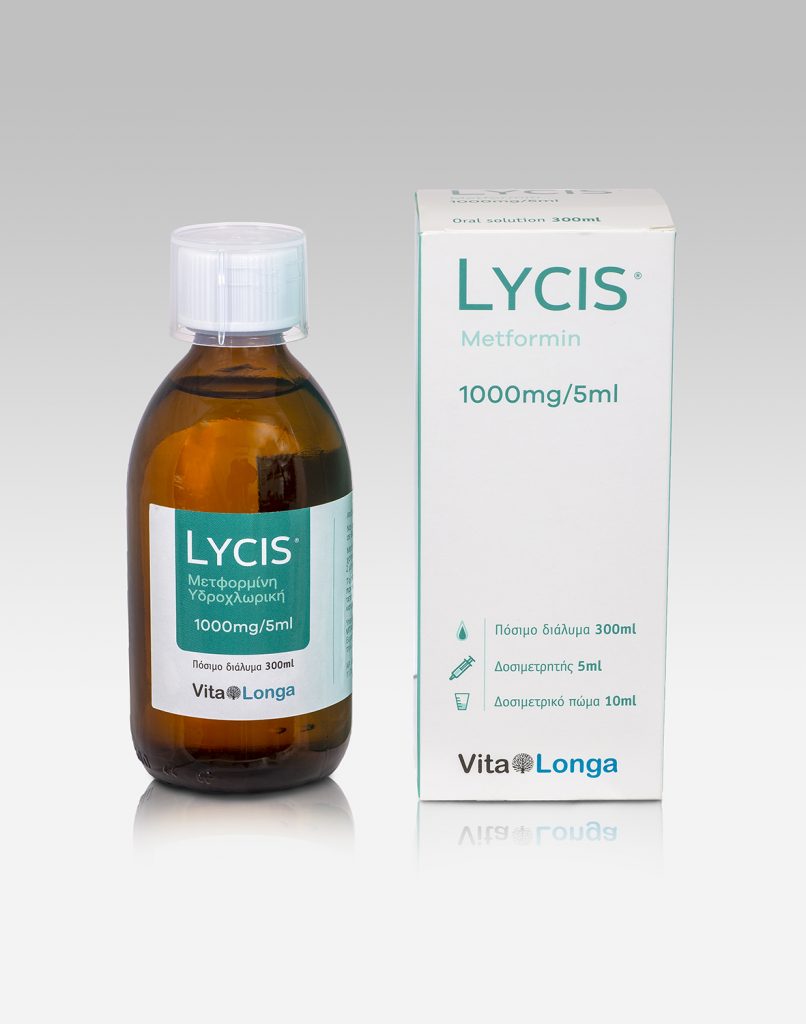
Lycis®
Metformin Oral Solution 1000mg/5mL
BT x BOTTLE x 300mL + (1 syringe x 5mL with 0.25mL graduation) + 1 syringe/bottle adapter + 1 10mL dosing cap with 5mL/10mL graduation
General
Lycis® contains the active substance metformin hydrochloride, which is a biguanide with anti-hyperglycaemic effects. It does not stimulate insulin secretion and consequently does not cause hypoglycaemia.
Indications
Treatment of type 2 diabetes mellitus, particularly in overweight patients, when dietary management and exercise alone do not result in adequate glycaemic control.
In adults, Lycis® Oral solution may be used as monotherapy or in combination with other oral antidiabetic agents or with insulin.
In children from 10 years of age and adolescents, Lycis® Oral solution may be used as monotherapy or in combination with insulin.
In overweight adult patients with type 2 diabetes who have been treated with metformin as first-line therapy after diet failure, a reduction in diabetic complications has been shown
Posology and Method of Administration
Dosage
Adults
Monotherapy and combination with other oral antidiabetic agents
The usual starting dose is 500mg (2.5ml) or 850mg (4.25ml) metformin hydrochloride 2 or 3 times daily, given during or immediately after meals.
After 10 to 15 days, the dose should be adjusted based on blood glucose measurements. A slow increase of dose may improve gastrointestinal tolerability.
The maximum recommended dose of metformin hydrochloride is 3g (15ml) daily, given in 3 divided doses.
If a transfer from another oral antidiabetic agent is intended: discontinue the other agent and initiate metformin at the dose indicated above.
Combination with insulin
Metformin hydrochloride and insulin may be used in combination therapy to achieve better blood glucose control. Metformin hydrochloride is given at the usual starting dose of 500mg (2.5ml) or 850mg (4.25ml) 2 or 3 times daily, while the insulin dose is adjusted based on blood glucose measurements.
Elderly
Due to the potential for decreased renal function in elderly patients, the metformin hydrochloride dose should be adjusted based on renal function. Regular assessment of renal function is necessary.
Patients with renal impairment
Metformin hydrochloride may be used in patients with moderate renal impairment, stage 3a (creatinine clearance [CrCl] 45-59ml/min or estimated glomerular filtration rate [eGFR] 45-59ml/min/1.73m2) only in the absence of other conditions that may increase the risk of lactic acidosis and with the following dose adjustments:
The starting dose is 500mg (2.5ml) or 850mg (4.25ml) metformin hydrochloride, once daily. The maximum dose is 1000mg (5ml) daily, given in 2 divided doses. Renal function should be closely monitored (every 3-6 months).
If CrCl or eGFR falls below 45ml/min or 45ml/min/1.73m2 respectively, metformin hydrochloride should be discontinued immediately.
Paediatric population
Monotherapy and combination with insulin
- Lycis® Oral solution can be used in children from 10 years of age and adolescents.
- The usual starting dose is 500mg (2.5ml) or 850mg (4.25ml) metformin hydrochloride, once daily, given during or after meals.
After 10 to 15 days, the dose should be adjusted based on blood glucose measurements. A slow increase of dose may improve gastrointestinal tolerability. The maximum recommended dose of metformin hydrochloride is 2g (10ml) daily, given in 2 or 3 divided doses.
Method of administration
Lycis® Oral solution is for oral use only.
A graduated syringe for oral use and a syringe adapter that is fitted to the bottle (Press-In Bottle Adapter, PIBA), as well as a dosing cup, are supplied with the product.
- Open the bottle and, on first use, insert the bottle adapter.
- Insert the syringe into the bottle adapter and draw up the required volume from the inverted bottle.
- Remove the filled syringe from the bottle in an upright position.
- Empty the contents of the syringe into the mouth. Repeat steps 2 to 4 as necessary to achieve the required dose.
- Rinse the syringe and replace the cap on the bottle (the bottle adapter should remain in place).
A 10ml dosing spoon is also included in the package.
Note
If necessary, Lycis® Oral solution can be administered via gastric, duodenal and nasal feeding tube, which should be flushed twice with 10 ml of water immediately after administration.
Undesirable Effects
At the start of treatment, the most common adverse reactions include nausea, vomiting, diarrhoea, abdominal pain and loss of appetite, which in most cases resolve spontaneously. To prevent them, it is recommended that metformin be taken in 2 or 3 doses per day and that the dose be increased slowly.
The following adverse reactions may occur during treatment with metformin. Frequencies are defined as follows: very common: ≥1/10, common: ≥1/100, <1/10, uncommon: ≥1/1,000, <1/100, rare: ≥1/10,000, <1/1,000, very rare: <1/10,000.
Within each frequency grouping, adverse reactions are presented in order of decreasing seriousness.
Metabolism and nutrition disorders
Common
- Decrease/deficiency of vitamin B12
Very rare
- Lactic acidosis.
Nervous system disorders
Common
- Taste disturbance.
Gastrointestinal disorders
Very common
- Gastrointestinal disorders such as nausea, vomiting, diarrhoea, abdominal pain and loss of appetite. These adverse reactions occur most often at the start of therapy and resolve spontaneously in most cases. To prevent these gastrointestinal symptoms, it is recommended that metformin be taken in 2 or 3 daily doses during or after meals. A slow increase of the dose may also improve gastrointestinal tolerability.
Hepatobiliary disorders
Very rare
- Isolated reports of liver function test abnormalities or hepatitis resolving upon metformin discontinuation.
Skin and subcutaneous tissue disorders
Very rare
- Skin reactions such as erythema, pruritus and urticaria.
Paediatric population
In published and post-marketing data, and in controlled clinical studies in a limited paediatric population aged 10-16 years treated for 1 year, adverse event reporting was similar in nature and severity to that reported in adults.
SmPC
Find the full SmPC of Lycis® here
Additional Links
Warning:
The above information is provided for informational or educational purposes. The initiation, continuation and discontinuation of treatment with Lycis® should be done strictly and only under the direction of a physician.
The links provided on this website that lead to external websites of international organisations, regulatory authorities and other bodies are for informational purposes only.
Vita Longa does not maintain any commercial, financial or other cooperation with the specific organisations, unless expressly stated. Reference or referral to them does not imply endorsement, sponsorship or recommendation of the views, information or services provided on the respective websites.


