
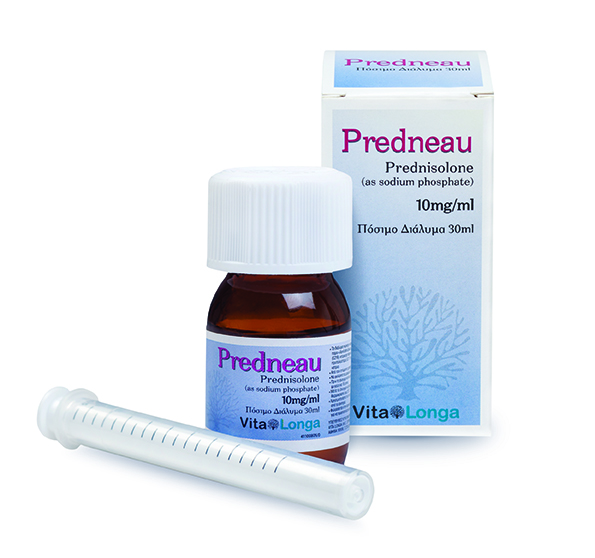
Predneau®
Prednisolone Oral Solution 10mg/mL
BT x BOTTLE x 30 ml + (1 syringe x 5 ml with 0.25 ml graduations) + 1 adapter
General Information
Predneau® contains prednisolone as its active ingredient, which belongs to the class of synthetic corticosteroids. Prednisolone is a synthetic glucocorticoid and, specifically, a synthetic derivative of cortisol, which is a hormone produced by the adrenal cortex. Prednisolone has primarily anti-inflammatory, anti-allergic, and immunosuppressive properties and is included in the World Health Organization’s List of Essential Medicines , which lists the most effective and safest medicines required in a health system.
Indications
PREDNEAU 10 mg/mL oral solution is indicated for use in adults and children.
A wide variety of conditions may sometimes require treatment with corticosteroids.
Some of the main indications are as follows:
- bronchial asthma, severe hypersensitivity reactions, anaphylaxis, rheumatoid arthritis, systemic lupus erythematosus, dermatomyositis, mixed connective tissue disease (excluding systemic sclerosis), polyarteritis nodosa,
- inflammatory skin diseases, including pemphigus vulgaris, bullous pemphigoid, and gangrenous pyoderma,
- minimal change nephrotic syndrome, acute interstitial nephritis,
- ulcerative colitis, Crohn’s disease, sarcoidosis,
- rheumatic carditis,
- hemolytic anemia (autoimmune), acute lymphoblastic and chronic lymphocytic leukemia, malignant lymphoma, multiple myeloma, idiopathic thrombocytopenic purpura,
- immunosuppression following transplantation.
Posology and Method of Administration
Dosage
The lowest dose that produces an acceptable result should be used. When a reduction in dosage is possible, it should be achieved gradually. During prolonged treatment, any concomitant illnesses, trauma, or surgery require a temporary increase in dosage. If you have stopped taking corticosteroids after prolonged treatment, you may need to temporarily resume taking them.
Adults
The dosage used depends on the disease, its severity, and the clinical response. The following regimens are for guidance only. Usually, a divided dosage is used.
Short-term treatment
20 mg (2 mL) to 30 mg (3 mL) daily for the first few days, followed by a gradual reduction in dosage by 2.5 mg (0.25 mL) or 5 mg (0.5 mL) every two to five days, depending on the response.
Rheumatoid arthritis
7.5 mg (0.75 mL) to 10 mg (1 mL) daily. The minimum effective dose is used for maintenance therapy.
For most other conditions
10 mg (1 mL) to 100 mg (10 mL) daily for one to three weeks, followed by a reduction to the minimum effective dose.
Pediatric Population
Fractions of the adult dose may be used (e.g., 75% for 12-year-olds, 50% for 7-year-olds, and 25% for 1-year-olds), but due consideration must be given to clinical factors.
PREDNEAU oral solution may be administered at the start of treatment in children with acute asthma attacks. For children over 5 years of age, administer a dose of 30–40 mg (3–4 mL) of prednisolone. For children 2–5 years of age, administer a dose of 20 mg (2 mL) of prednisolone. Those already taking maintenance steroid tablets should receive 2 mg/kg of prednisolone up to a maximum dose of 60 mg (6 mL). The prednisolone dose may be repeated for children who are vomiting, but the possibility of intravenous steroid administration should be considered for children who are unable to retain the medication after oral administration. Treatment for up to three days is usually sufficient, but the duration of the course should, of course, be adjusted to the number of days necessary to achieve recovery. There is no need to taper the dose at the end of treatment.
For children under 2 years of age, PREDNEAU oral solution may be used initially in the management of moderate to severe acute asthma episodes in a hospital setting, at a dose of 10 mg (1 mL) for up to three days.
Route of administration
Oral.
Adverse Effects
The occurrence of predictable adverse reactions, including suppression of the hypothalamic-pituitary-adrenal (HPA) axis, is related to the relative potency of the drug, the dosage, the timing of administration, and the duration of treatment .
The following adverse reactions may be associated with long-term systemic use of corticosteroids.
Unknown (cannot be estimated from the available data)
Infections and infestations: Increased susceptibility and severity of infections with suppression of clinical symptoms and signs, opportunistic infections, reactivation of latent tuberculosis.
Benign, malignant, and unspecified neoplasms (including cysts and polyps): Kaposi’s sarcoma has been reported in patients receiving corticosteroid therapy. Discontinuation of corticosteroids may lead to clinical remission.
Blood and lymphatic system disorders: Leukocytosis.
Immune system disorders: Hypersensitivity and anaphylaxis have been reported.
Endocrine system disorders: Suppression of the HPA axis. Features of Cushing’s syndrome. Carbohydrate intolerance with increased need for antidiabetic therapy, manifestation of latent diabetes mellitus.
Metabolic and nutritional disorders: Sodium and water retention, hypokalemia, hypokalemic alkalosis, increased appetite, negative protein and calcium balance.
Psychiatric disorders: Euphoria, psychological dependence, depressive mood, insomnia, exacerbation of schizophrenia.
A wide range of psychiatric reactions has been reported, including emotional disturbances (such as irritability, euphoria, depression, mood swings, and suicidal ideation), psychotic reactions (including mania, hallucinations, delusions, and worsening of schizophrenia), behavioral disorders, irritability, anxiety, sleep disturbances, and cognitive impairment, including confusion and amnesia. These reactions are common and may occur in both adults and children. In adults, the frequency of serious reactions has been estimated at 5–6%. Psychological effects related to corticosteroid withdrawal have been reported. The frequency is unknown.
Nervous system disorders: Dizziness, headache. Exacerbation of epilepsy.
Ocular disorders: Glaucoma, optic disc edema, posterior subcapsular cataract, central serous chorioretinopathy, exophthalmos, thinning of the cornea or sclera, worsening of viral or fungal eye infections, and blurred vision (see also section 4.4).
Ear and labyrinth disorders: Vertigo
Cardiac disorders: Myocardial rupture following a recent myocardial infarction. Congestive heart failure (in susceptible patients). Bradycardia following high doses.
Vascular disorders: Hypertension, embolism.
Respiratory, thoracic, and mediastinal disorders: Hiccups.
Gastrointestinal disorders: Dyspepsia, nausea, vomiting, abdominal distension, abdominal pain, diarrhea, esophageal ulceration, candidiasis, acute pancreatitis. Peptic ulcer with perforation and bleeding.
Skin and subcutaneous tissue disorders: Skin atrophy, skin striations, acne, telangiectasia, hyperhidrosis, rash, pruritus, urticaria, hirsutism.
Musculoskeletal and connective tissue disorders: Myopathy, osteoporosis, fractures of the spine and long bones, osteonecrosis following vascular destruction, myalgia.
Renal and urinary tract disorders: Scleroderma nephropathy. The incidence of scleroderma nephropathy varies across different subpopulations. The highest risk has been reported in patients with diffuse systemic sclerosis. The lowest risk has been reported in patients with limited systemic sclerosis (2%) and juvenile systemic sclerosis (1%).
Reproductive system and breast disorders: Abnormal menstruation, amenorrhea.
General disorders and administration site conditions: Delayed wound healing, discomfort.
Laboratory tests: Weight gain.
Injuries, poisonings, and complications of therapeutic procedures: Tendon rupture, bruises (ecchymosis).
Withdrawal Symptoms
Extremely rapid reduction of corticosteroid dosage following prolonged therapy may lead to acute adrenal insufficiency, hypotension, and death
Additionally, a “withdrawal syndrome” may occur, causing fever, myalgia, arthralgia, rhinitis, conjunctivitis, painful itching of skin nodules, and weight loss.
In some cases, withdrawal symptoms may include or resemble a clinical relapse of the disease for which the patient has been treated.
Other effects that may occur when corticosteroid therapy is discontinued or changed include the following: benign intracranial hypertension with headache and vomiting, and papilledema caused by cerebral edema.
Latent rhinitis or eczema may become apparent.
Pediatric Population
Increased intracranial pressure with papilledema in children (pseudotumor cerebri), usually following discontinuation of therapy.
Growth retardation during infancy, childhood, and adolescence
SmPC
Find the full SmPC of Predneau® here
Additional Links
Warning:
The information above is provided for informational or educational purposes. Treatment with Predneau® should be initiated, continued, and discontinued strictly and only under a doctor’s supervision.
The links provided on this website that lead to external websites of international organizations, regulatory authorities, and other entities are for informational purposes only.
Vita Longa has no commercial, financial, or other affiliation with these organizations, unless explicitly stated. Any mention or reference to them does not imply endorsement, sponsorship, or recommendation of the views, information, or services provided on the respective websites.
Vita Longa assumes no responsibility for the content, accuracy or updating of the information hosted on external websites.


